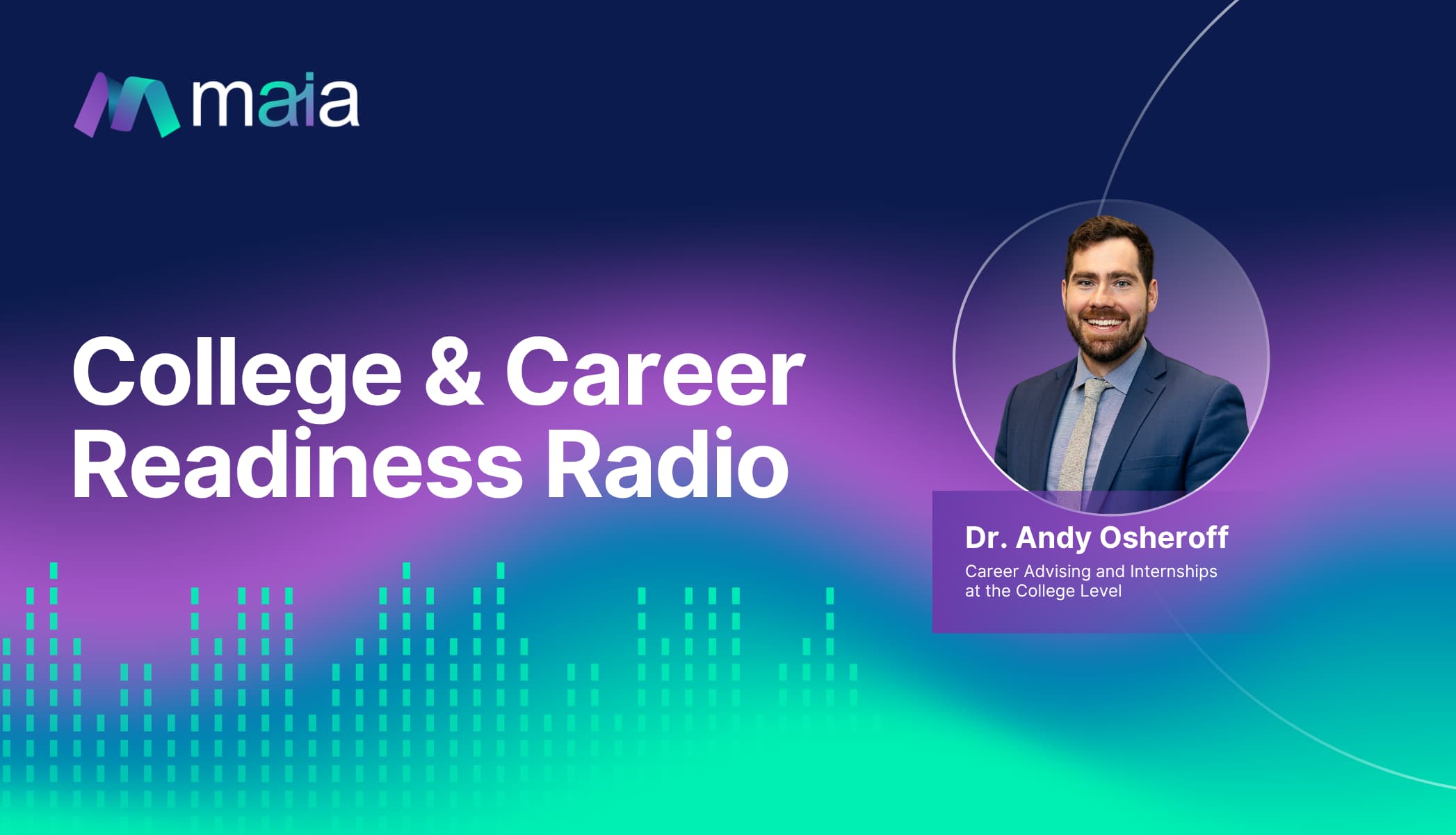
Andy Osheroff's Bio
Andy is the Director of the Career & Employment Hub at the University of Southern Maine, where he leads a team dedicated to transforming how students discover, pursue, and land meaningful careers. With over a decade of experience spanning higher education and nonprofit administration, he has built a reputation for turning vision into action, doubling his team's size, securing major grant funding, and launching innovative programs including peer career advising and equity-focused internships.
A PhD in Leadership and Organizational Development grounds Andy's work in research while keeping it firmly rooted in real-world impact. His dissertation explores how teams drive organizational adaptability, a question that shapes everything from how he runs his office to how he designs programming for students. At USM, he has become a leading voice in integrating career development throughout the institution, helping students approach their futures with curiosity and intention rather than anxiety.
Dr. Osheroff says that career development should begin as soon as students arrive at college, not in their final year, because early engagement helps them build confidence, find opportunities, and avoid missing out on internships or other high-impact experiences.
He explains that his office at the University of Southern Maine uses peer career guides to create a low-pressure first step for students who may be hesitant to meet with a professional advisor.
Dr. Osheroff notes that the peer career guide model works because students connect more easily with near peers who are still figuring things out, and because empathy is essential to effective peer advising.
He says the program includes training, ongoing development, and employer-led sessions so students can learn what the job market values and share that insight with others.
He emphasizes that internships should be more accessible, not just highly competitive summer opportunities, and says his team runs the program three times a year to create more entry points.
He describes a process in which his team handles student recruitment, screening, interview coaching, and employer matching, making the internship process easier for both students and employers.
He says spreading internships across fall, spring, and summer reduces competition and helps students fit part-time internships around their classes.
He explains that the program grew because USM invested in it over time and was able to show that it improved student retention, classroom success, and post-graduation outcomes.
He says paid internships are essential for equity because many students are commuters, work part-time, and have rent, childcare, or other financial responsibilities.
Dr. Osheroff explains that funding comes from grants and cost-sharing with employers, with each partner’s share varying by organization size and other factors.
He says the goal is to create meaningful, project-based internships rather than busywork, and his team helps employers design stronger roles from the start.
He notes that each internship begins with a learning agreement and three student-set learning outcomes, followed by midpoint check-ins to address issues before the internship ends.
He tells listeners that the team measures outcomes through surveys, resume support, and longer-term follow-up with alumni to see where participants go afterward and how the experience shaped them.
His main message is simple: if an idea is useful, start small, try it, and let it grow in your own context.
.avif)